Monroe Doctrine: Explained
› The Monroe Doctrine was a United States policy, as stated by the fifth President Monroe in 1823, that the U.S. opposed further European colonization of and interference with independent nations in the Western Hemisphere.
› The Monroe Doctrine was articled in president James Monroe's seventh annual message to Congress on December 2, 1823, at a time when nearly all Latin American colonies of Spain and Portugal had achieved or were at the point of gaining, independence from the Portuguese and Spanish Empires.
› As a component of foreign policy, the Monroe Doctrine has had a considerable effect and has had strong support in the United States in part because it has promoted U.S. interests.
› By the end of the 19th century, Monroe's declaration was seen as a defining moment in the foreign policy of the United States and one of its longest-standing tenets.
Causes of Monroe Doctrine
› The U.S. government feared the victorious European powers that emerged from the Congress of Vienna (1814–1815) would revive the monarchical government. France had already agreed to restore the Spanish Monarchy in exchange for Cuba.

5th U.S. President James Monroe
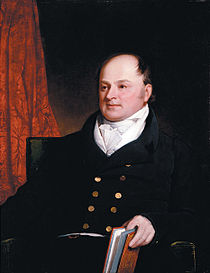
Secretary of State John Quincy Adams, author of the Monroe Doctrine
› United States and Great Britain were concerned over the possibility of European colonial expansion in the Americas Britain feared that Spain would attempt to reclaim its former colonies which had recently gained independence.
What did the Monroe Doctrine state?
The content of the Monroe Doctrine is as follows:
· The Monroe Doctrine stated that efforts by European nations to colonize land in North or South America would be viewed as acts of aggression, requiring U.S. intervention
· The Monroe Doctrine stated that any interference by European nations with states in North or South America would also be viewed as acts of aggression, requiring U.S. intervention
· The Monroe Doctrine stated that the United States would not interfere with existing European colonies
· The Monroe Doctrine stated that the United States would not interfere with the internal affairs of European countries
The "Big Brother" policy was an extension of the Monroe Doctrine formulated by James G. Blaine in the 1880s that aimed to rally Latin American nations behind US leadership and open their markets to US traders. Blaine served as Secretary of State in 1881 under President James A. Garfield and again from 1889 to 1892 under President Benjamin Harrison. As a part of the policy, Blaine arranged and led the First International Conference of American States in 1889.


